How Much Fuel Does a Campervan Use?
Find out how much fuel a campervan uses, what affects fuel consumption and how to calculate fuel costs before your next road trip.

Alannah F
Marketing Manager
How Much Fuel Does a Campervan Use?
Planning a campervan road trip is exciting, but working out how much it will cost to drive is an important part of budgeting.
Fuel can be one of the biggest expenses on a long road trip, particularly if you're travelling hundreds or thousands of kilometres. But how much fuel does a campervan actually use?
The answer depends on the size of the vehicle, its engine, weight, driving conditions and the type of route you're travelling.
A small campervan will generally use less fuel than a large motorhome, while driving through mountainous areas or at higher speeds can increase consumption.
Here's what you need to know about campervan fuel consumption, how to estimate your costs and how to make your fuel last longer on the road.
How much fuel does a campervan use per 100km?
Campervan fuel consumption varies considerably depending on the vehicle.
As a broad guide, many compact campervans use around 8–12 litres of fuel per 100km, while larger campervans and motorhomes can use approximately 12–18 litres per 100km or more.
These are estimates rather than guaranteed figures. Older vehicles, heavier models, larger engines and challenging driving conditions can all increase fuel consumption.
The best way to estimate fuel costs is to check the manufacturer's fuel consumption figures for the specific vehicle, then allow some extra for real-world driving conditions.
What affects campervan fuel consumption?
Several factors influence how much fuel your campervan uses.
1. Vehicle size and weight
One of the biggest factors is the size and weight of the vehicle.
A compact campervan generally uses less fuel than a large motorhome because it is lighter and often has a smaller engine.
Larger vehicles have more weight to move, particularly when fully loaded with passengers, luggage, water and equipment.
If you're travelling as a couple, a smaller campervan may be a more economical choice than hiring a large motorhome with more space than you need.
2. Engine type
The type and size of the engine also affect fuel consumption.
Many campervans and motorhomes use diesel engines, although petrol models are also available. Fuel efficiency varies between individual vehicles, so it's worth checking the specifications rather than assuming one fuel type will always be cheaper.
Hybrid and electric campervans are also emerging in some markets, although availability and charging infrastructure vary by destination.
3. Driving speed
Driving at higher speeds generally increases fuel consumption, particularly in larger vehicles.
Motorhomes and campervans are less aerodynamic than standard cars, meaning they can use considerably more fuel when travelling at motorway speeds.
Maintaining a steady speed and avoiding unnecessary acceleration can help improve efficiency.
4. Road conditions
The type of road you're driving on can make a significant difference.
Long, flat motorways may allow for more consistent fuel consumption, while steep hills, winding roads, stop-start traffic and rough surfaces can increase it.
If you're travelling through mountainous regions, allow extra room in your fuel budget.
5. How much you're carrying
The heavier your campervan, the more energy it needs to move.
Overpacking can therefore increase fuel consumption, particularly on longer journeys.
Before setting off, remove anything you don't need and avoid carrying unnecessary equipment.
6. Tyre pressure and vehicle maintenance
Incorrect tyre pressure can increase rolling resistance and make your vehicle less fuel-efficient.
Check tyre pressures regularly, particularly before long journeys, and follow the manufacturer's recommendations.
Keeping up with routine maintenance also helps your vehicle run efficiently.
How much does it cost to fuel a campervan?
The cost of filling up a campervan depends on the size of the fuel tank, the fuel type and the price per litre at the pump.
For example, if your campervan uses 12 litres per 100km and you're planning to drive 1,000km, you would need approximately 120 litres of fuel.
To calculate the estimated cost, multiply the litres required by the price per litre.
You can use this simple formula:
Distance travelled ÷ 100 × fuel consumption per 100km = litres required
Then:
Litres required × fuel price per litre = estimated fuel cost
For a more accurate budget, use the fuel consumption figure for your actual vehicle and check local fuel prices along your route.
Remember that fuel prices can vary significantly between countries, regions and individual stations.
How to calculate fuel costs for a campervan road trip
Before setting off, estimate the total distance you plan to drive.
For example, imagine you're planning a 1,500km road trip in a campervan that averages 12 litres per 100km.
Your estimated fuel requirement would be:
1,500 ÷ 100 × 12 = 180 litres.
If fuel costs $1.80 per litre, your estimated fuel spend would be $324.
This is only an example, but it gives you a useful starting point when planning your road trip budget.
It's also worth adding a contingency to your estimate. You may drive further than planned, take detours or encounter conditions that increase fuel consumption.
7 ways to save fuel on a campervan road trip
Fuel costs can add up, but there are several ways to make your campervan more economical.
1. Drive at a steady speed
Avoid unnecessary acceleration and sudden braking. Maintaining a consistent speed helps reduce fuel consumption, particularly on longer journeys.
2. Avoid carrying unnecessary weight
Only pack what you need. Extra luggage, equipment and supplies add weight, which can increase the amount of fuel your vehicle uses.
3. Check tyre pressure
Underinflated tyres can increase fuel consumption. Check the recommended pressure before setting off and inspect your tyres regularly.
4. Plan your route
Use a navigation app to plan your journey and avoid unnecessary detours. Choosing a more direct route can reduce the distance you travel and the amount of fuel you use.
However, don't automatically choose the shortest route if it involves difficult roads or significant elevation changes.
5. Avoid excessive idling
Leaving your engine running while parked wastes fuel. If you're stopped for an extended period and it's safe to switch off, do so.
6. Compare fuel prices
Fuel prices can vary between stations, particularly in remote areas and popular tourist destinations.
Use fuel price apps where available and plan refuelling stops ahead of time. Don't leave it until the tank is nearly empty before looking for a station, especially in remote regions.
7. Choose the right vehicle
If you're hiring a campervan, think about how much space you actually need.
A smaller vehicle may be more fuel-efficient and easier to drive, which can make a noticeable difference over a long road trip.
How much fuel should you carry on a campervan road trip?
This depends on your route and the availability of fuel stations.
If you're travelling through major cities and popular tourist areas, finding a fuel station is generally straightforward.
However, if you're driving through remote parts of Australia, New Zealand, Canada or the USA, distances between fuel stations can be much greater.
Research your route before setting off and identify where you can refuel. Never assume there will be a petrol station around the next corner when travelling through remote areas.
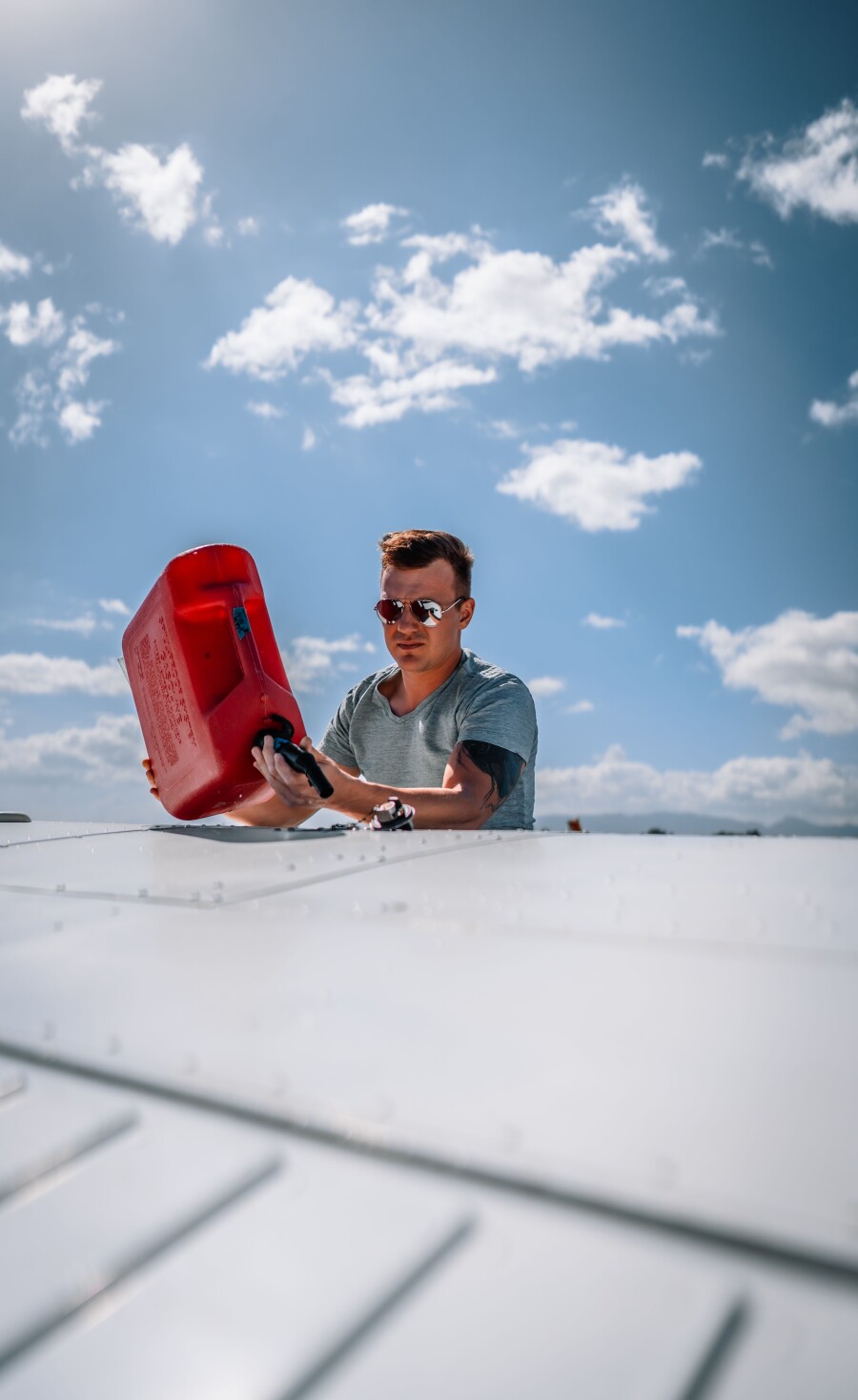
If your route includes long stretches without services, make sure you have enough fuel to reach the next station. Follow the vehicle manufacturer's guidance and use only approved fuel containers where carrying additional fuel is permitted.
Does a $1/day campervan relocation include fuel?
A $1/day vehicle relocation doesn't automatically mean fuel is included.
With Imoova, the majority of relocation deals are available for just $1 per day, giving travellers an affordable way to access a campervan or motorhome.
Fuel arrangements depend on the individual listing. Some relocations include a fuel reimbursement or allowance to help cover the cost of driving the vehicle to its destination.
The amount and conditions vary by deal, so always check the listing before booking.
If a relocation includes a fuel allowance, factor it into your overall budget when comparing routes. It can make an already affordable road trip even better value.
You can browse the latest Imoova relocations to see available routes and their individual inclusions.
Frequently Asked Questions
How many litres of fuel does a campervan use per 100km?
As a general estimate, a compact campervan might use around 8–12 litres per 100km, while larger campervans and motorhomes can use approximately 12–18 litres per 100km or more. Actual consumption depends on the vehicle and driving conditions.
Are campervans fuel-efficient?
Campervans are generally less fuel-efficient than standard cars because they're larger, heavier and less aerodynamic. Smaller campervans tend to use less fuel than large motorhomes.
Is diesel or petrol better for a campervan?
It depends on the vehicle. Many larger campervans and motorhomes use diesel engines, while some smaller models use petrol. Compare the vehicle's actual fuel consumption and consider fuel availability and prices along your route.
How much does it cost to fill up a campervan?
The cost depends on the fuel tank capacity and local fuel prices. Check the vehicle specifications for its tank size, then multiply the number of litres needed by the price per litre.
How can I reduce fuel costs on a campervan road trip?
Drive at a steady speed, avoid unnecessary weight, check tyre pressure, plan your route and compare fuel prices. Choosing a smaller campervan can also help reduce fuel consumption.
Do $1/day campervan relocations include fuel?
Not automatically. Some Imoova relocation listings include fuel reimbursements or allowances, while others require travellers to cover their own fuel. Always check the individual listing for details.
Plan your next road trip with Imoova
Fuel is an important part of any campervan road trip budget, but it doesn't have to stop you from exploring.
By choosing the right vehicle, planning your route and driving efficiently, you can keep fuel costs under control and make your money go further.
And if you're looking for an affordable way to get on the road in the first place, Imoova offers campervan and motorhome relocations for just $1 per day across multiple destinations.
Ready to find your next adventure? Browse Imoova's latest vehicle relocations and start planning your road trip.
Follow Us On Socials
Stay connected for the latest updates and travel inspiration